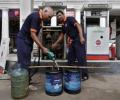
In Budget 2015, the finance minister has opted to take the slow road and has doubled the cess on coal to "balance the need to tax pollution and the price of power" in his words.

E-waste accounts for 70 per cent of Indian landfills.
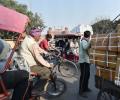
Rickshaw pullers and construction workers are the worst hit.
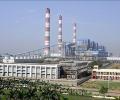
Green rating of thermal power plants are way behind the global best.

'Drought in the 1990s was essentially the drought of a poor India.' 'This 2016 drought is of a richer and more water-guzzling India.' 'The severity and intensity of the drought is not about lack of rainfall.' 'It is about the lack of planning and foresight, and criminal neglect.'

'This is not a Sanjay Baru or Natwar Singh type of book. It's not a memoir. It's not a book to reveal conversations, real or imaginary. This is not a book to position myself at the centre of the world.' Jairam Ramesh on his stint as environment minister.

Banning meat is cruel demonetisation. It is stealing from the poor, nothing less, writes Sunita Narain.

We need to invest in the science of monsoons and weather forecasting.

Every time we pointed out the overwhelming evidence of diesel's toxicity, we were brushed aside.

The air pollution problem in the national capital won't go away till we take action -- such as ban the use of dirty fuels, ramp up public transport and oversee crop burning, says Sunita Narain.

The disagreements over what needs to be done on floodplains allows for illegal takeover by land mafia till nothing is left, observes Sunita Narain
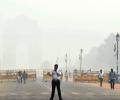
Delhi is a year-round health hazard that visitors shun like the plague, says Sunil Sethi.

The air quality in Delhi is turning worse, Deputy Chief Minister Manish Sisodia said.
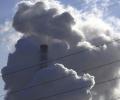
According to the amendment adopted by nations, developed countries will reduce HFCs use first, followed by China along with a large number of countries.

How can 'first food' meet the challenge posed by factory-made 'fast foods' which are backed by marketing money and often come with 'traditional taste' tags attached to them? The first step would be to preserve knowledge about first foods, says Dinesh C Sharma.

Senior journalist Darryl D'Monte reports exclusively for Rediff.com from Paris.

Now we need to fight back to reclaim our food and our habits. The only way to do so is to rediscover food as pleasure and be thrilled, not just by its smells and tastes, but also by the knowledge it embodies, says Sunita Narain.
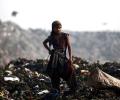
What will Indian cities do about its growing mountains of waste?

Lack of sanitation is leading to avoidable deaths of infants, and underweight and stunted children.

It is clear that the world desperately needs a globalisation model that will work for all and not just some, says Sunita Narain.

While India is pushed to keep a tight lid on its own carbon emissions, slow and low emission reduction by major polluters will cause an acceleration of climate change, says Rajni Bakshi.

Building toilets, however essential, must not be confused with sanitation and the crying need for a revamp of India's sewage systems.
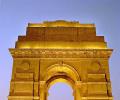
The announcement declaring New Delhi Municipal Council a winner of the smart city challenge came when the rest of Delhi was drowning in urban waste.

India lost around 38.5 thousand hectares of tropical forest in the last decade. Nearly 14 per cent of the country's tree cover! It is one thing for Modi to announce that India will reach a net-zero level of emissions in 2070. But if it is serious, it needs to start today, points out Ramesh Menon.

The most efficient utility for our smart cities will be about smart design.

Apart from Maggi noodles, many other products can be tested for health issues.

Authorities alerted people to avoid staying outdoors and L-G ordered to halt all civil construction activities across the city till Sunday.

If Paris really meant to serve as a landmark in recognising equity in climate negotiations, it should have heralded the second phase of the Kyoto protocol. Instead we have all countries, India and China included, all signing up with voluntary commitments in what can only be seen as a race to the bottom, reports Darryl D'Monte.

India is actively involved in reducing carbon emissions.

The Ganga agitation and the question of preserving the Himalayan ecology has become a deadly cocktail of politics and religion. Behind the scene, of course, at play are powerful business interests. What is needed is an independent scientific assessment of the problem and preparation of a blueprint for preservation of the Himalayan rivers and associated ecology, says Dinesh C Sharma.

Current forms of economic growth are widening disparities, leaving hundreds of millions of people to live in poverty, says Rajni Bakshi.

'For lakhs of people in the flood-afflicted state, battling against the elements is taking a huge toll. This is the time of the year that apples ripen, rice starts being harvested and preparations start in full swing to put aside some of the food stocks for the long winter months ahead. At this moment, though, people there believe if they can succeed in coming out of this calamity in one piece they will have won the war,' says Rashme Sehgal.
